01 / 03

SoulArt

UI Design Visual System iOS App Store 2024–2025

Brief

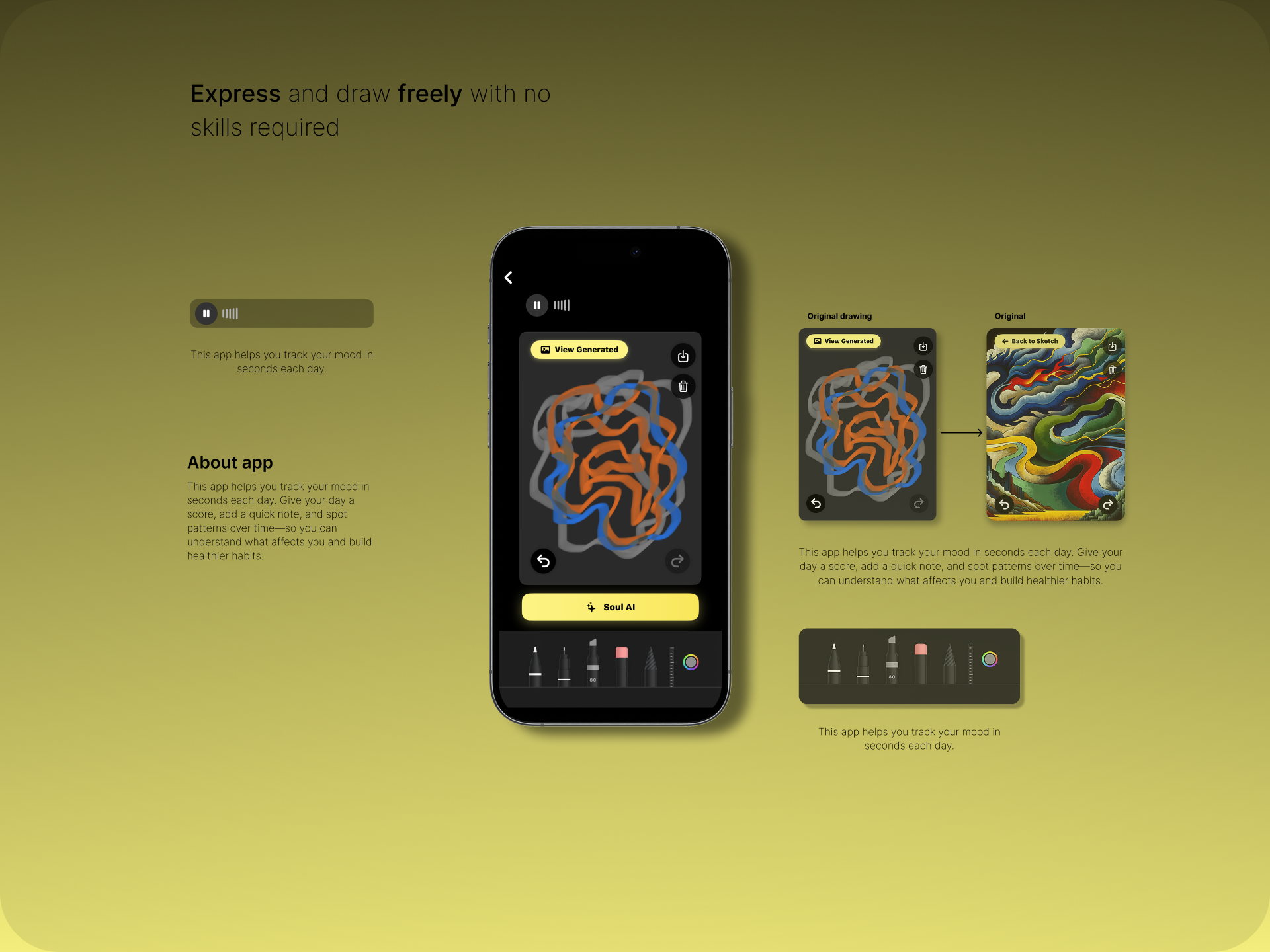
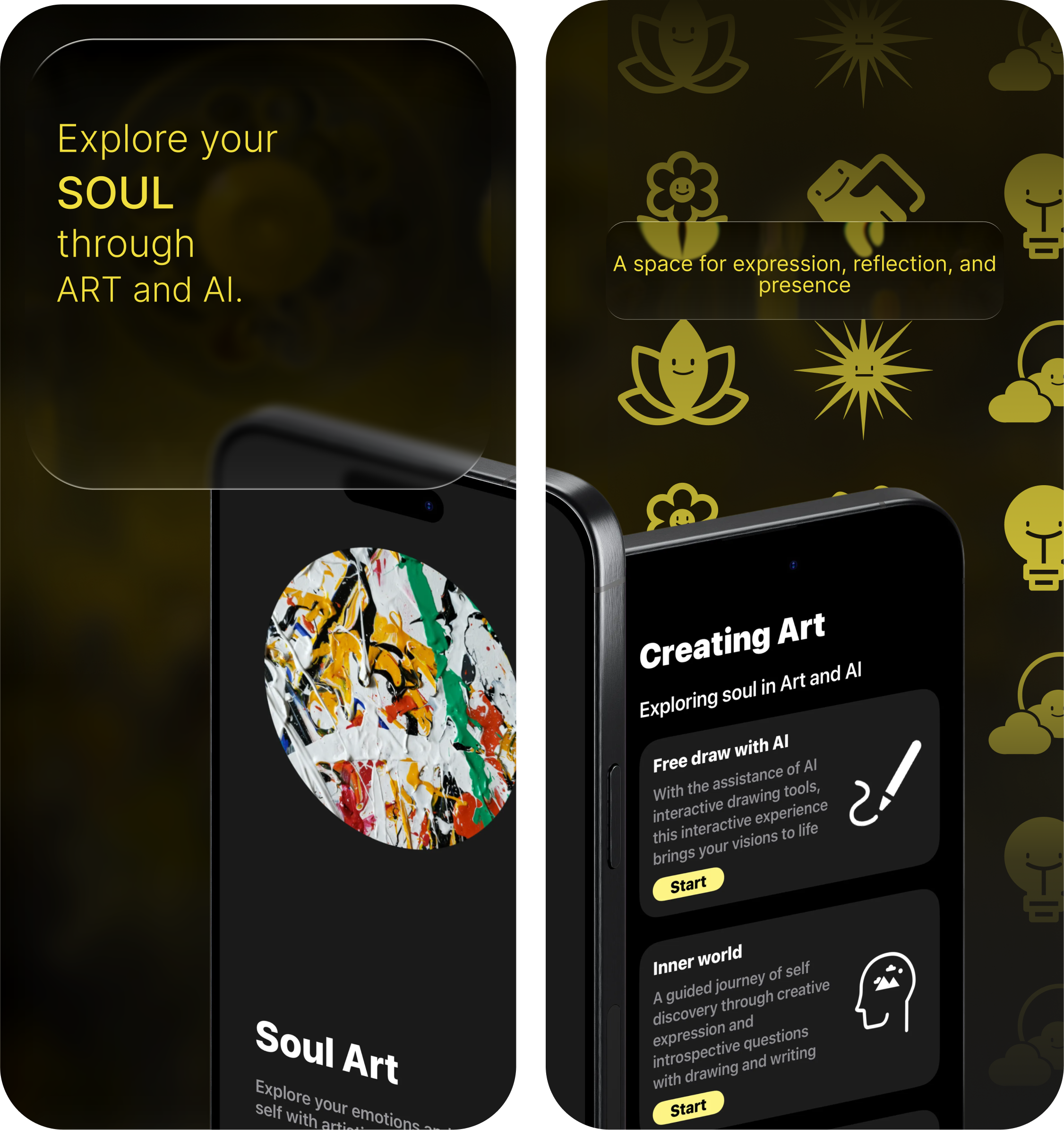
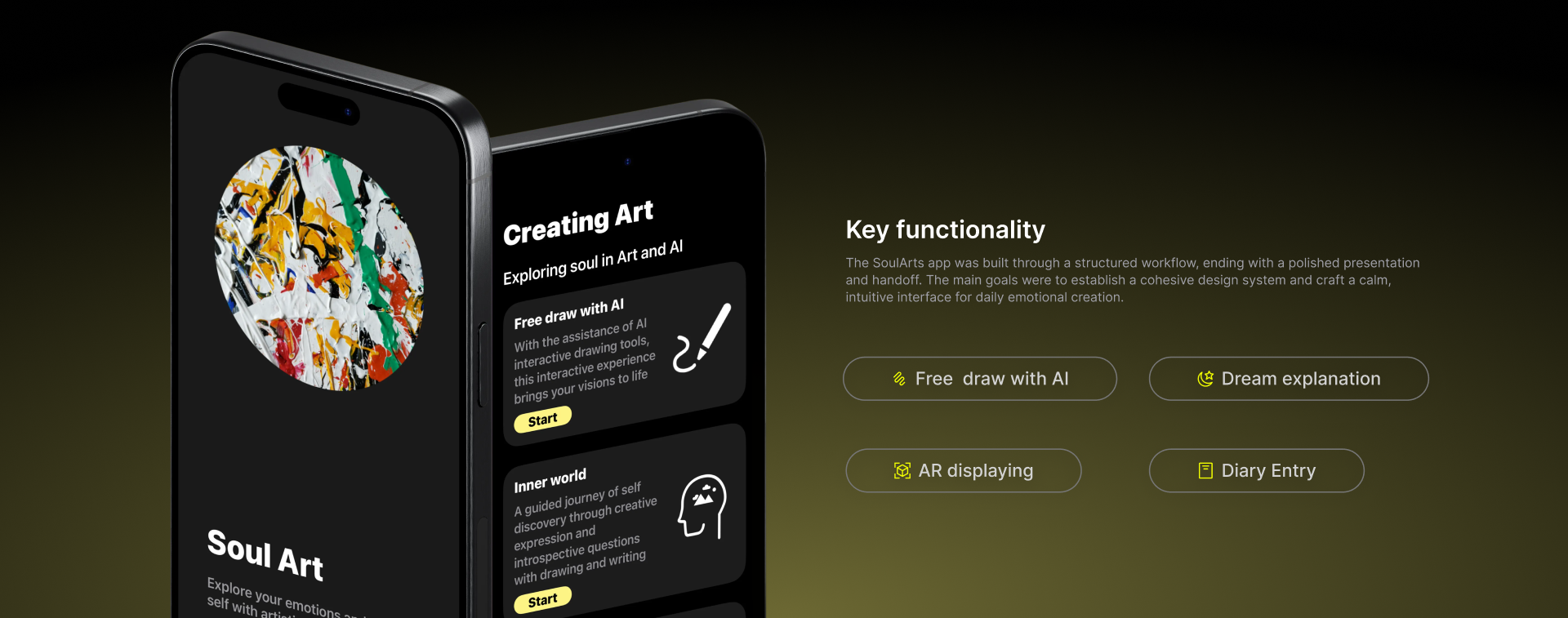
SoulArt is an AI-powered creative wellness app that helps people explore their emotions through art — no artistic skills required. Users draw freely, and AI transforms their sketches into polished artwork.

Timeline

Jun 2024
Concept
Aug 2024
Visual System
Oct 2024
Screen Design
Jan 2025
App Store Launch
SoulArt
Product statement

SoulArt is a digital creative platform that uses drawing, writing, sound, bodily perception, dream journaling, and other forms of creative expression to help people understand emotions, trauma, memory, and their relationship with the self. Rather than emphasizing artistic skill, SoulArt focuses on how people project the subconscious, organize emotions, and rebuild awareness of their own experiences through the creative process. Art can become a tool for inner exploration because many feelings that cannot be directly expressed through language — anxiety, loneliness, emotional residue, or trauma — often first emerge as images, colors, repeated symbols, or fragmented narratives.

Art, especially non-utilitarian creation, remains one of the few ways for people to reconnect with their inner perception. SoulArt proposes a new kind of “emotional interface” for the AI era. It assists users in continuously recording emotions, analyzing visual symbols, generating associative imagery, tracking long-term emotional changes, and even transforming vague inner experiences into visual languages that can be seen, discussed, and reinterpreted.

Unlike traditional art healing practices, the value of AI is not only efficiency or assistance, but the way it changes how people “look at themselves.” In the past, people confronted themselves through paper and paint; now, they begin to reinterpret their emotional structures through algorithms, data, and generative images. Through AI, people relearn how to feel, express, and understand themselves.

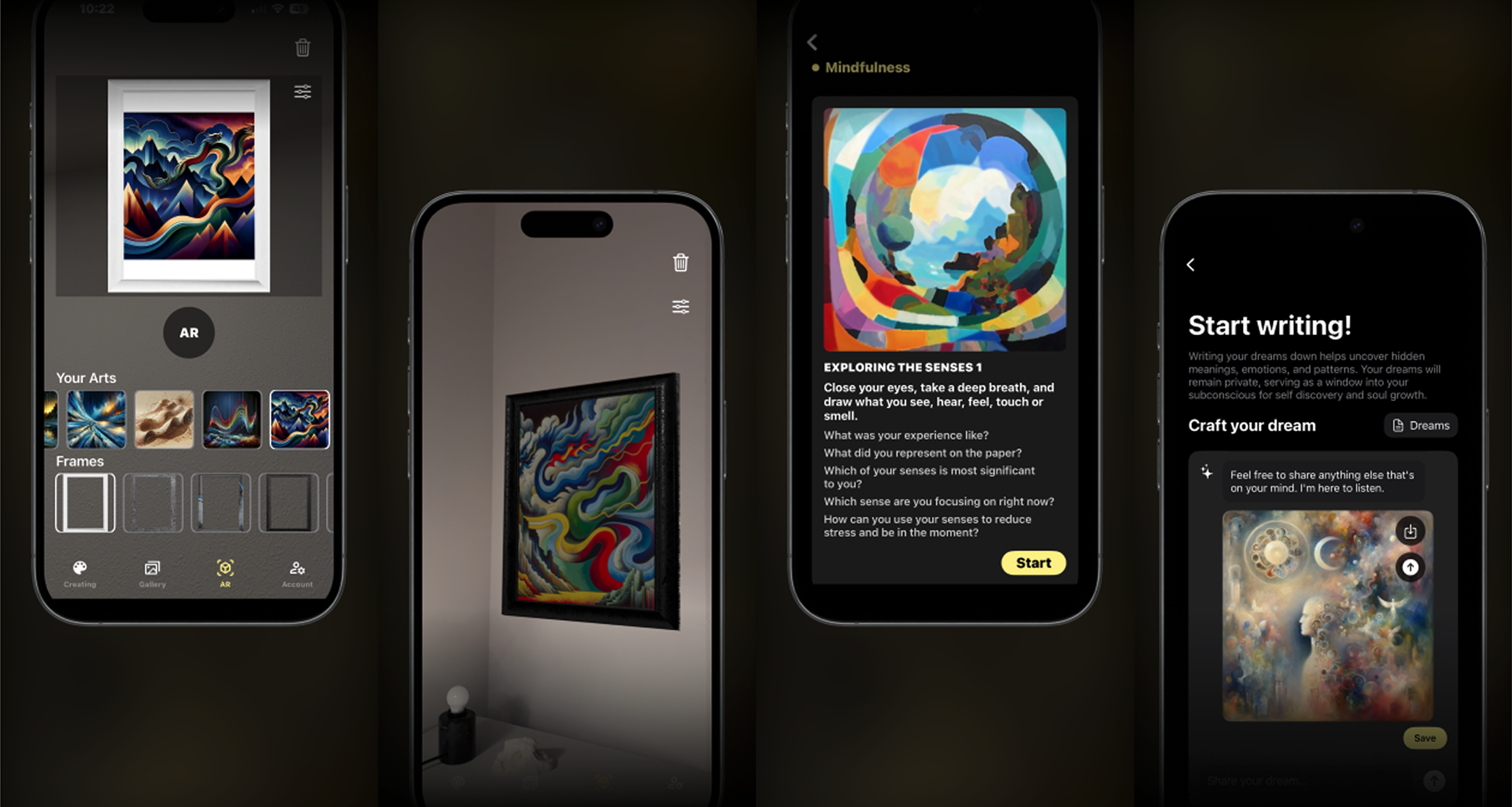
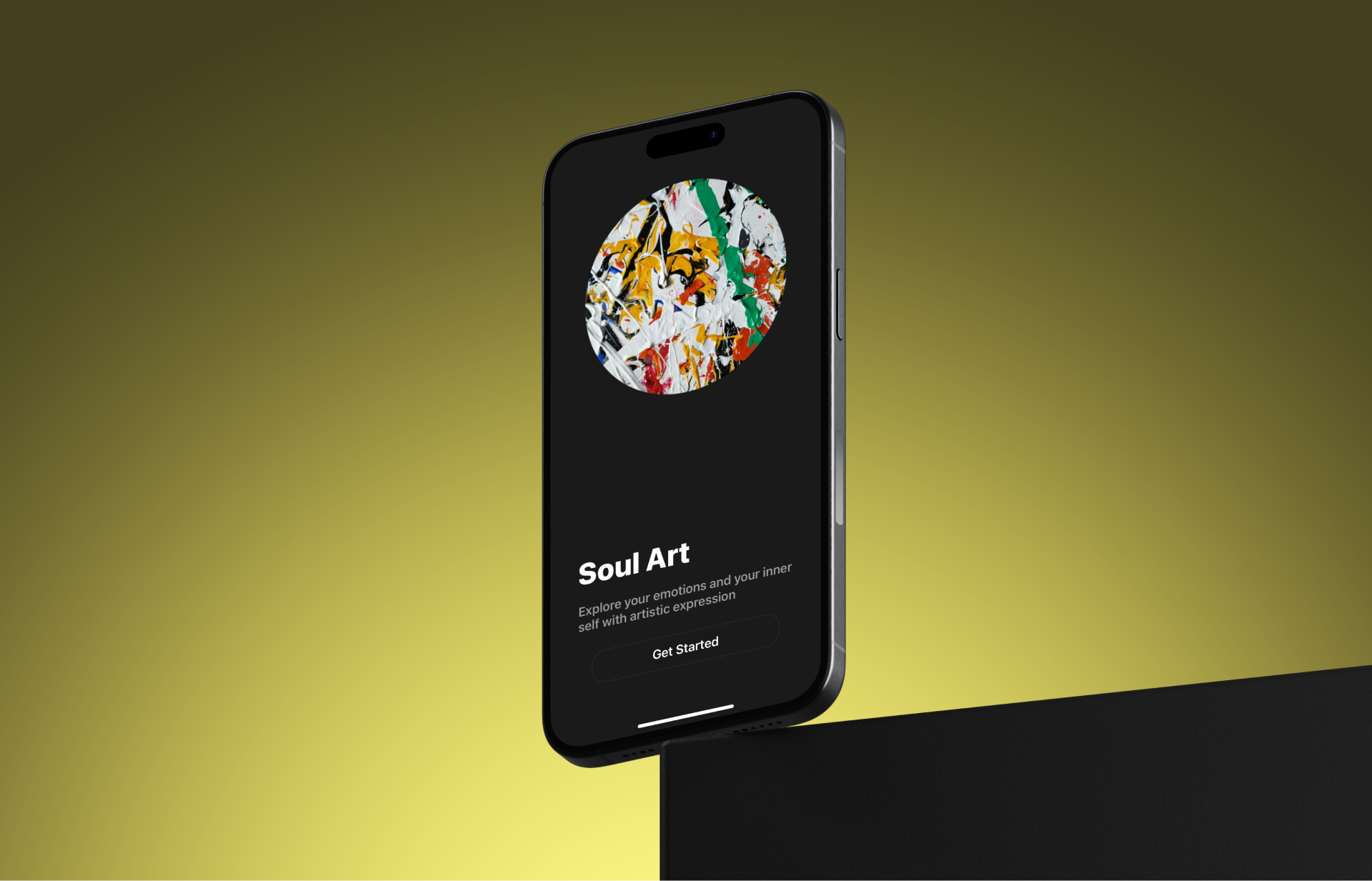
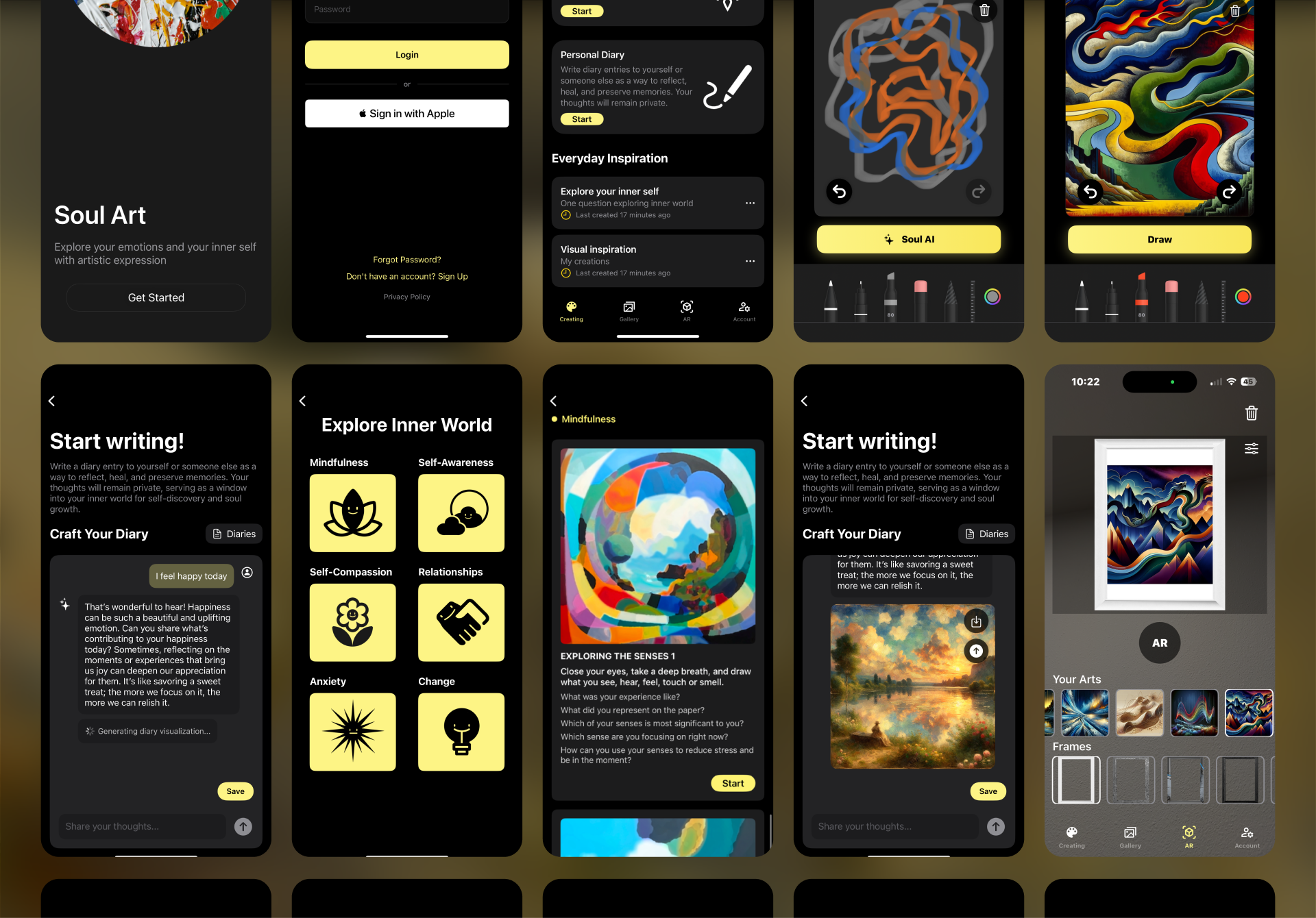
SoulArt mix screenshot SoulArt short
Platform

The SoulArt system

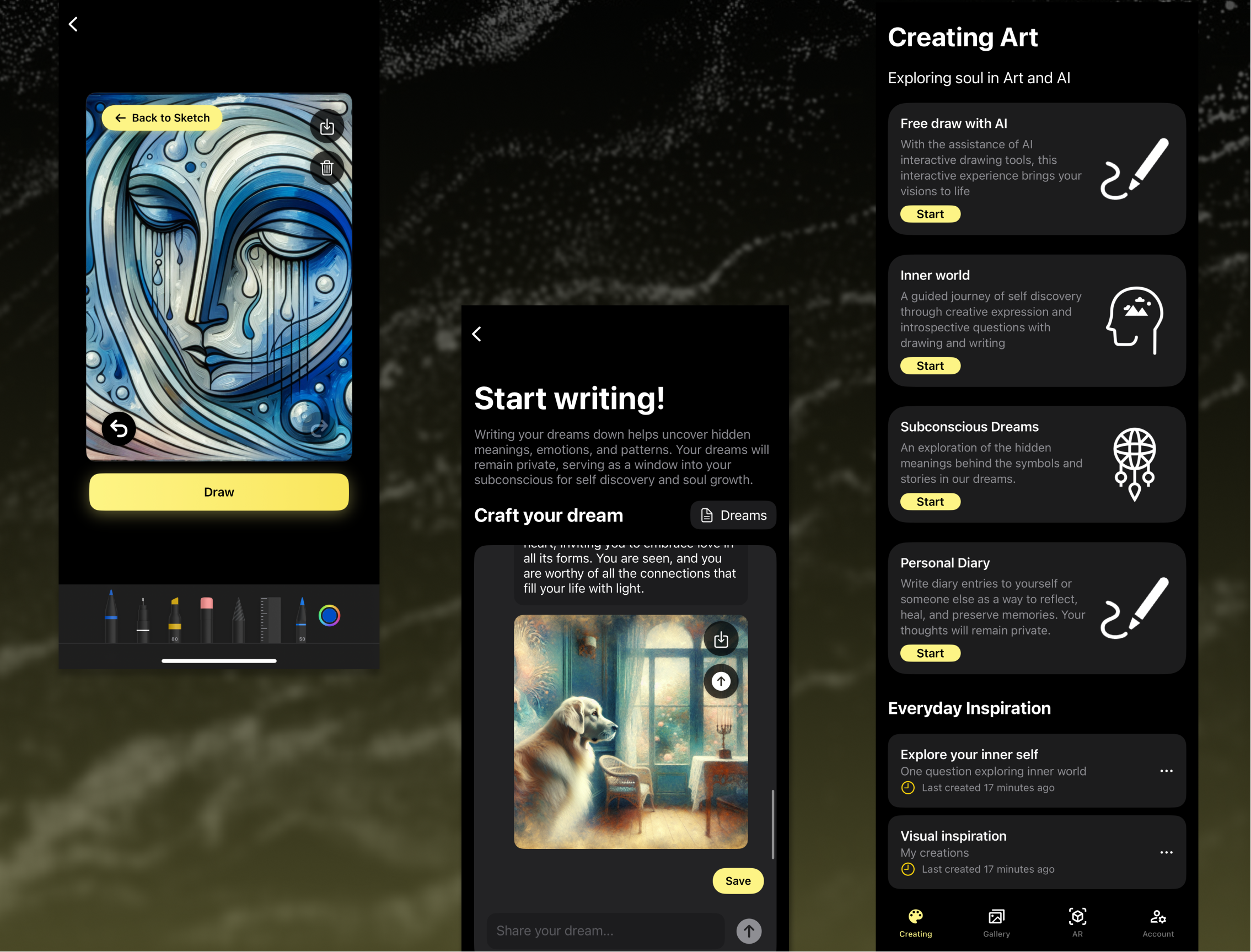
Generate visual extensions based on users’ drawings, writings, or dreams, helping them recognize recurring subconscious themes.

Discover long-term patterns between emotions, colors, composition, and language through continuous recording, revealing emotional patterns people may have ignored for years.

Translate “indescribable feelings” into images, sound, or spatial experiences, transforming unnamed emotions into something visible and perceivable.

Engage users through non-judgmental interaction during the creative process, rather than providing standardized answers.

Create a state of “co-creation with another consciousness,” allowing people to rediscover and reconnect with themselves.
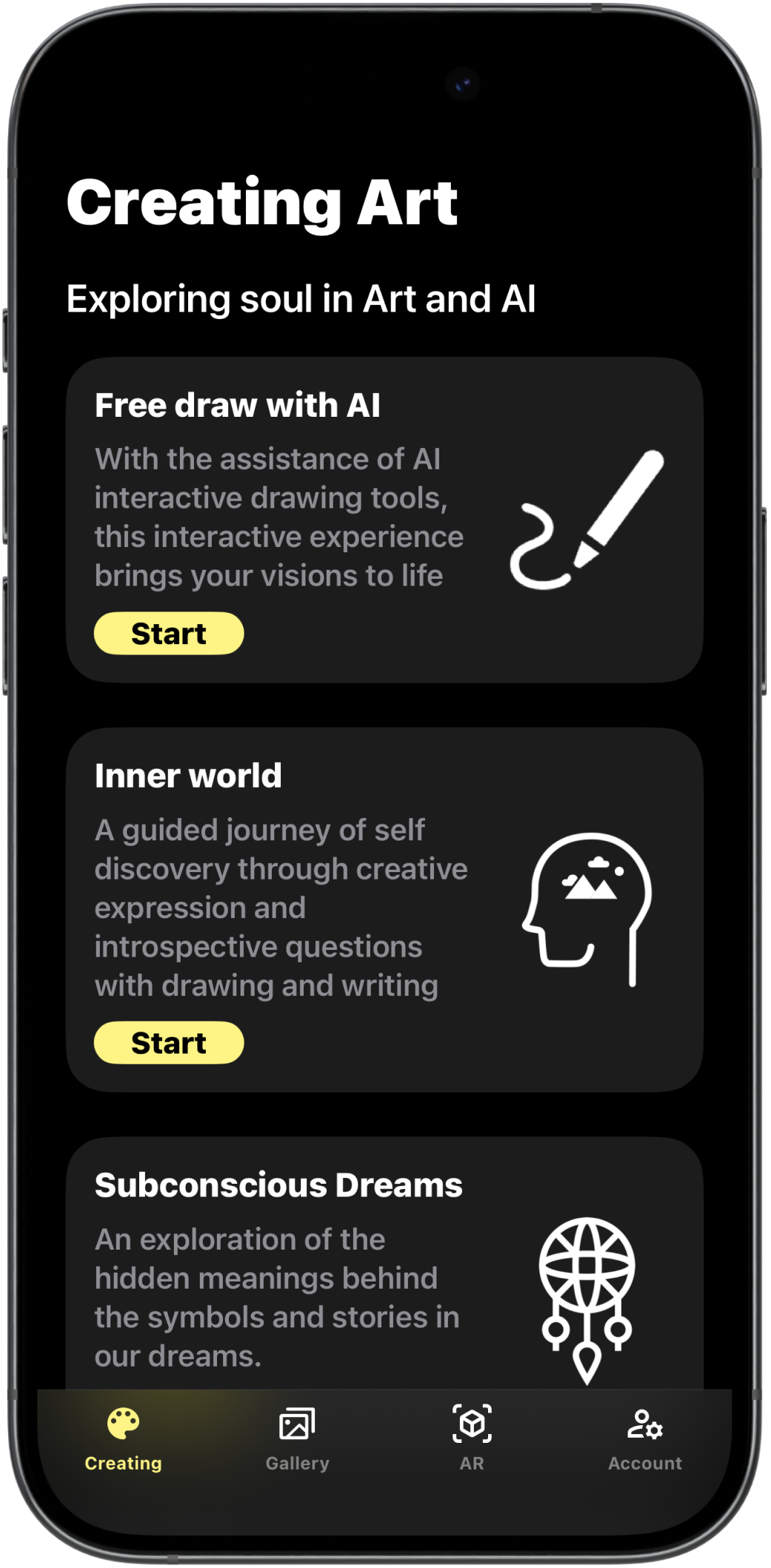
Home

Home

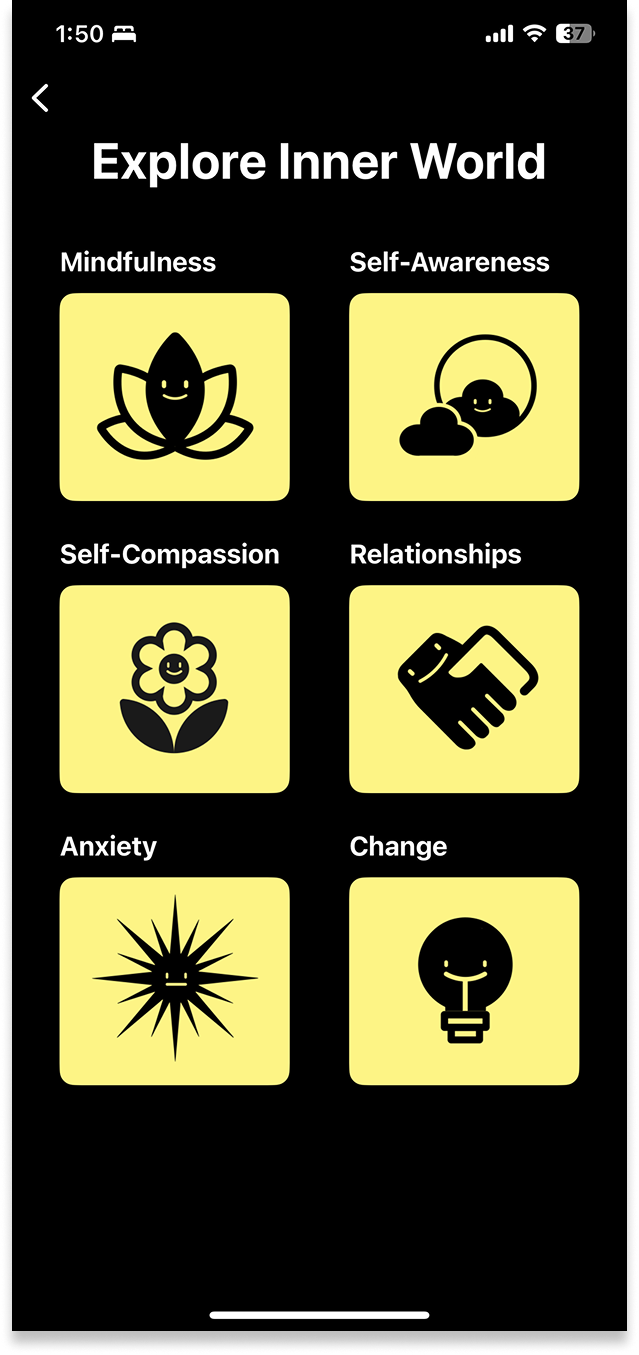
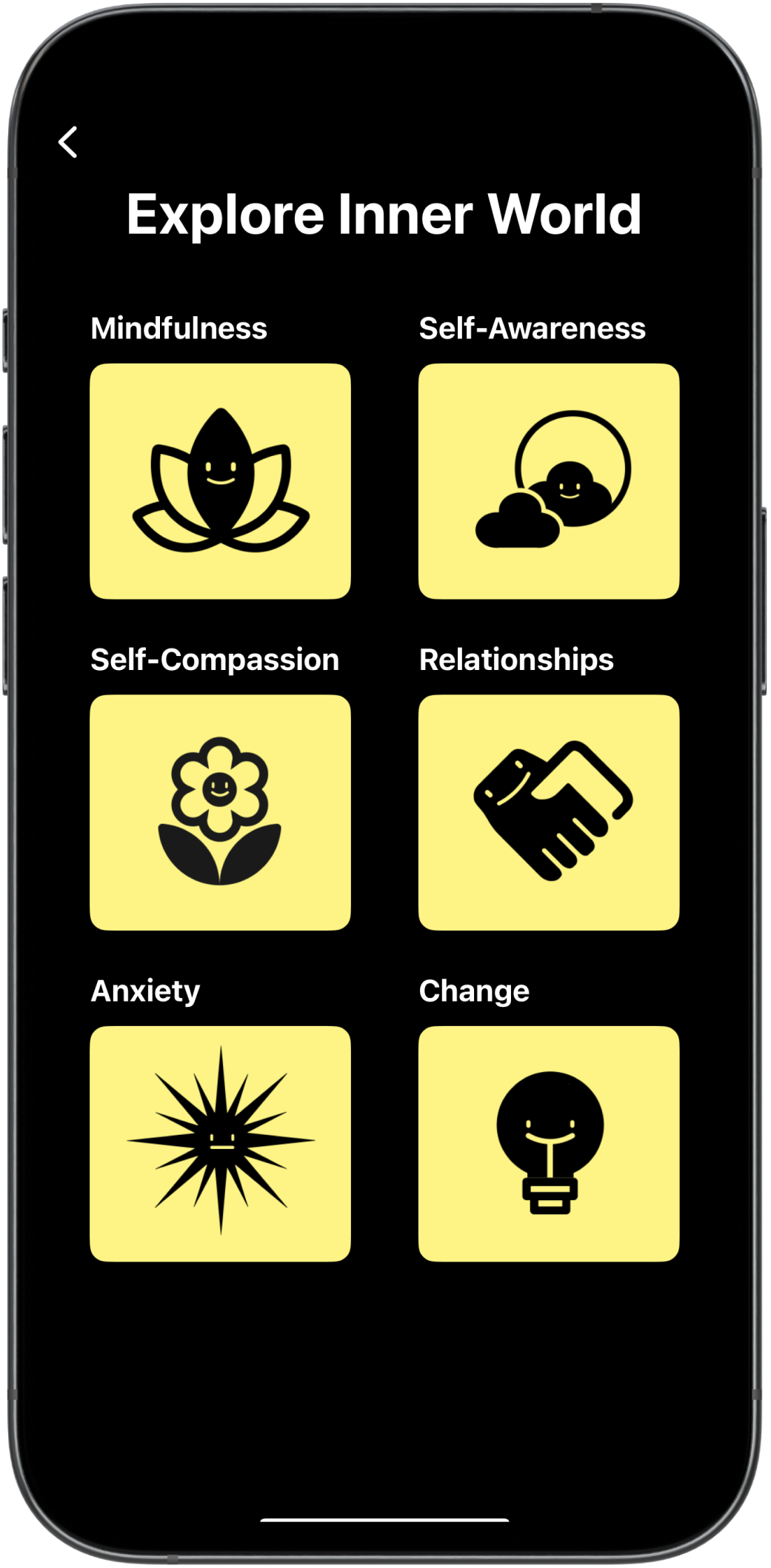
Inner World

Inner World

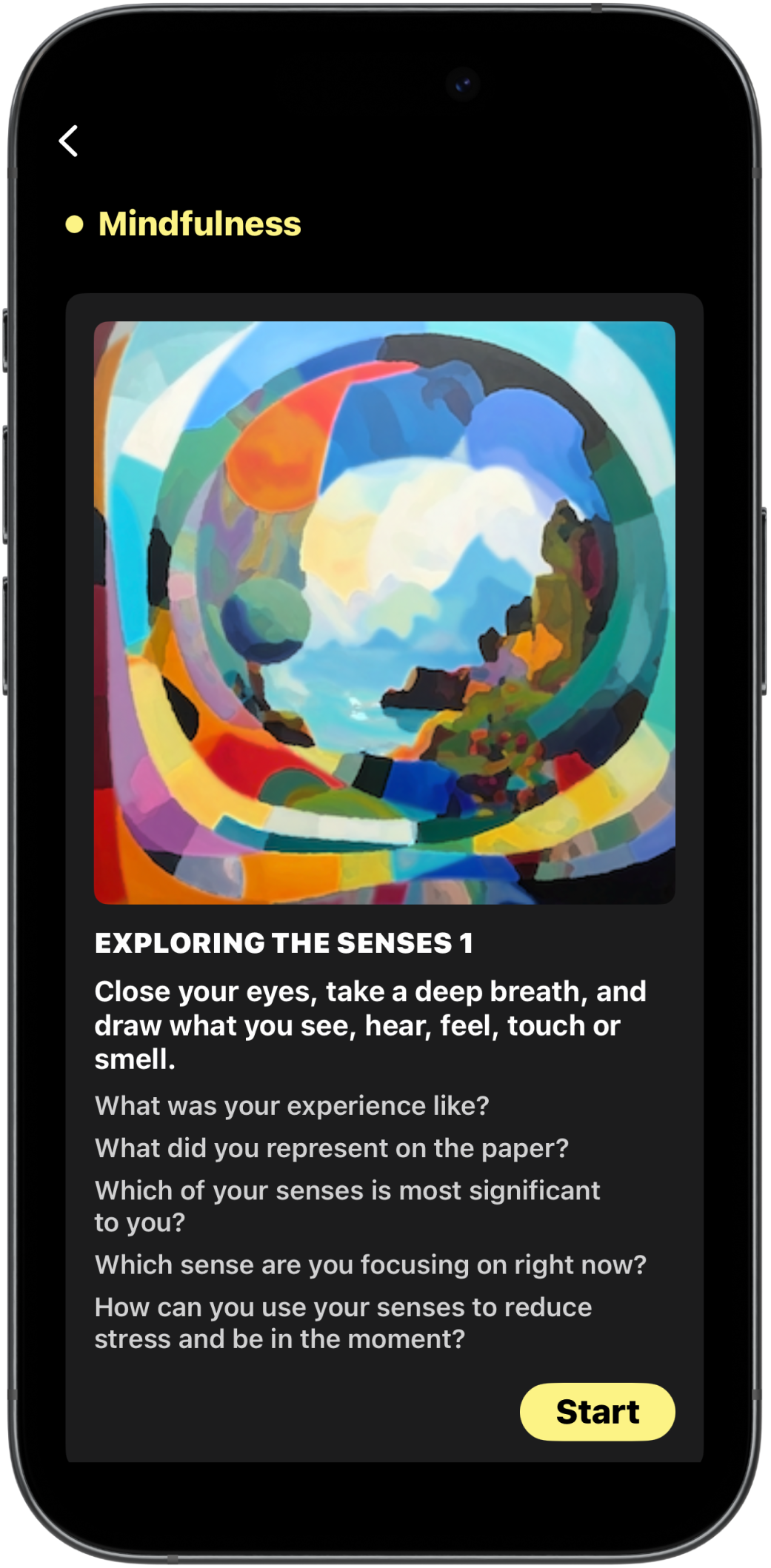
Mindfulness

Mindfulness

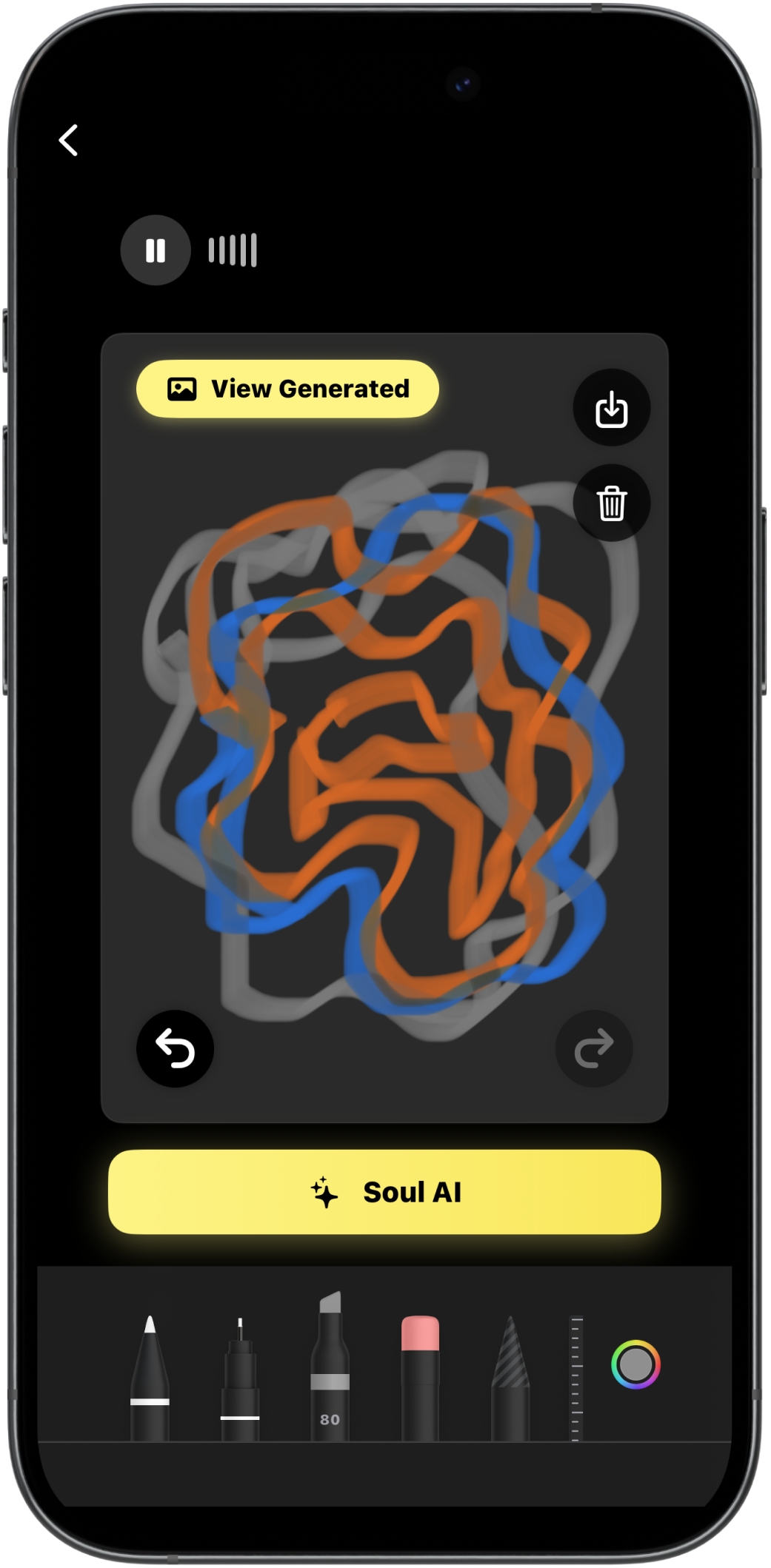
Canvas

Canvas

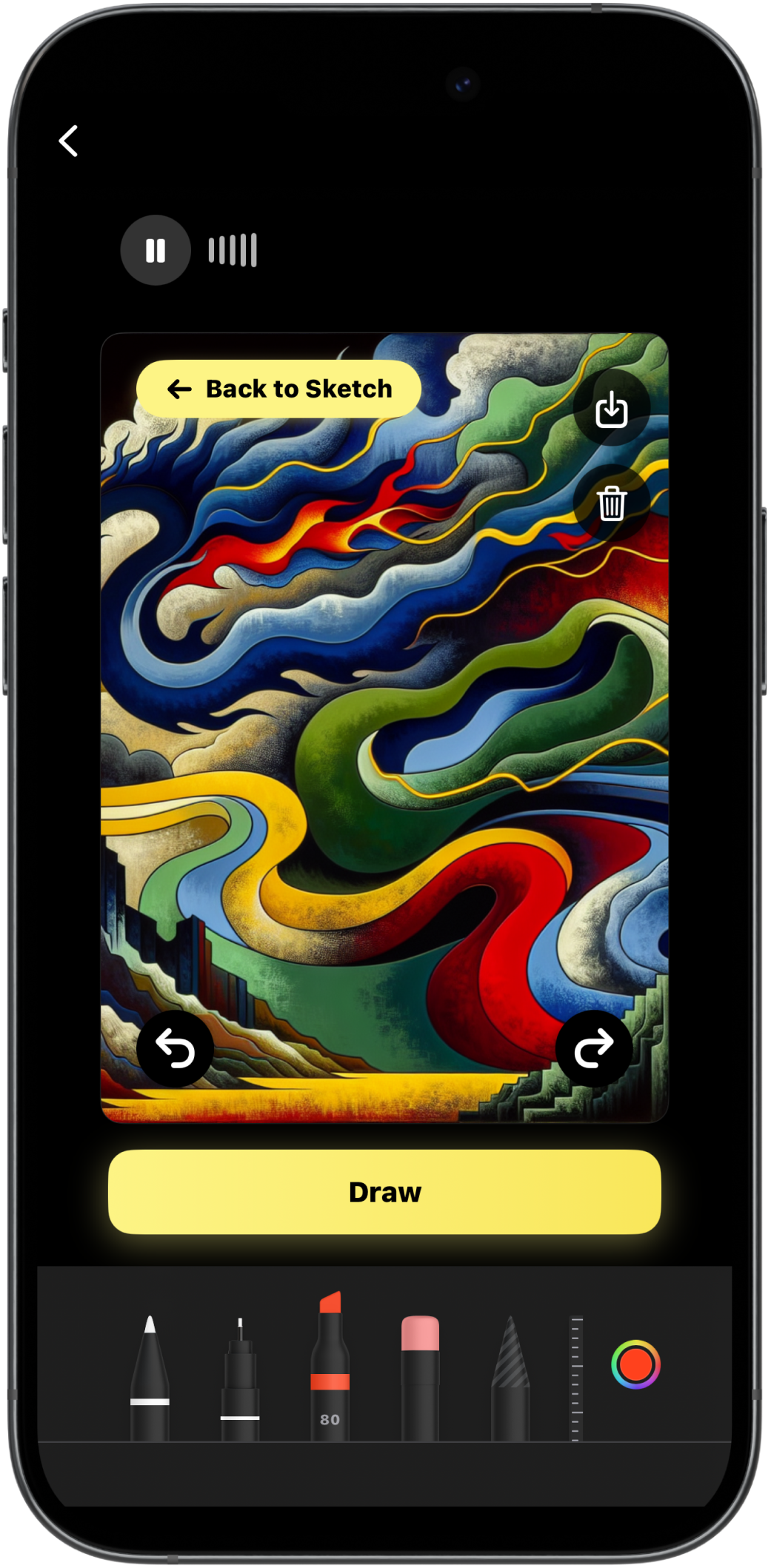
AI Generation

AI Generation

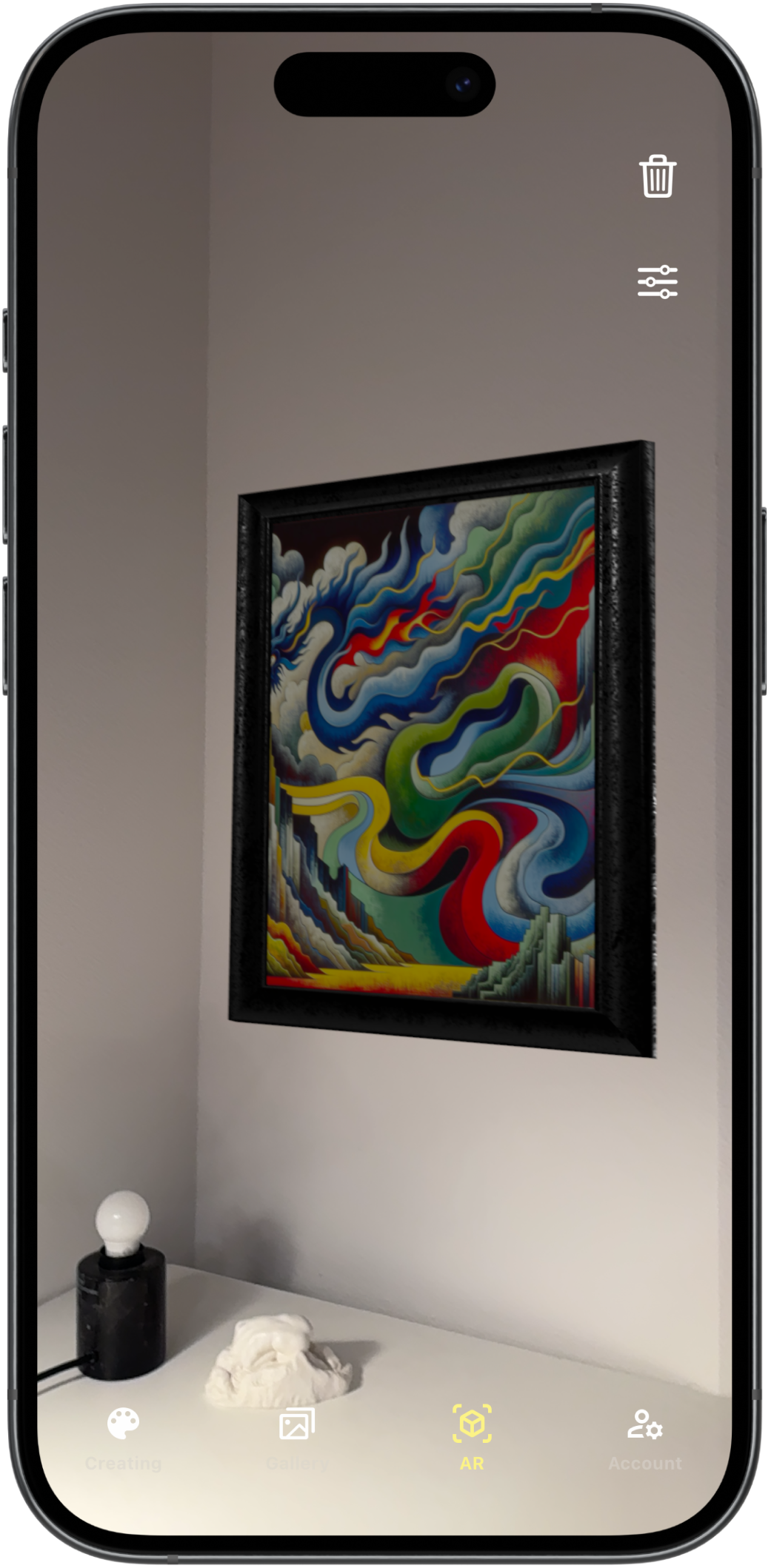
AR Display

AR Display

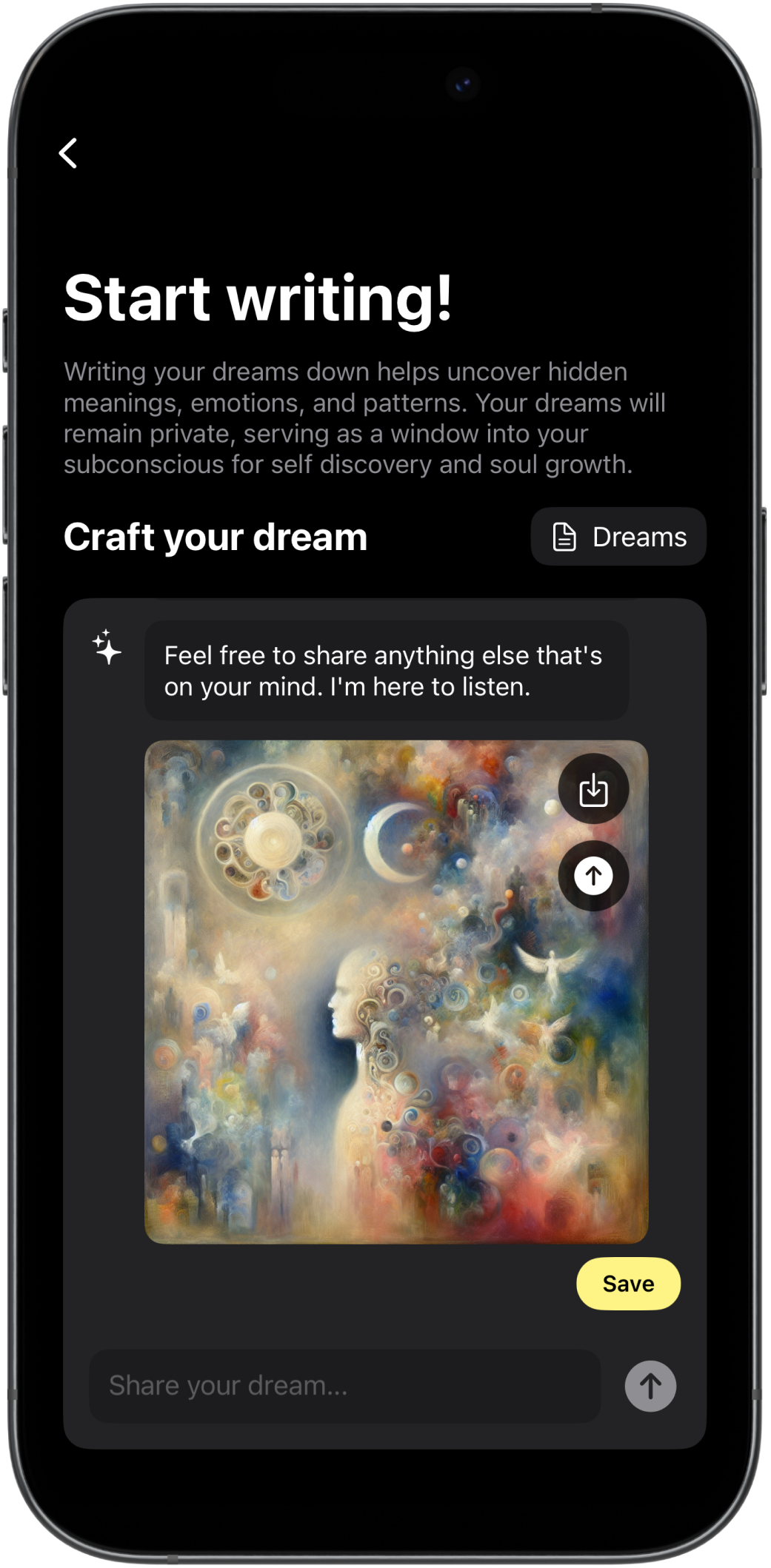
Dream

Dream

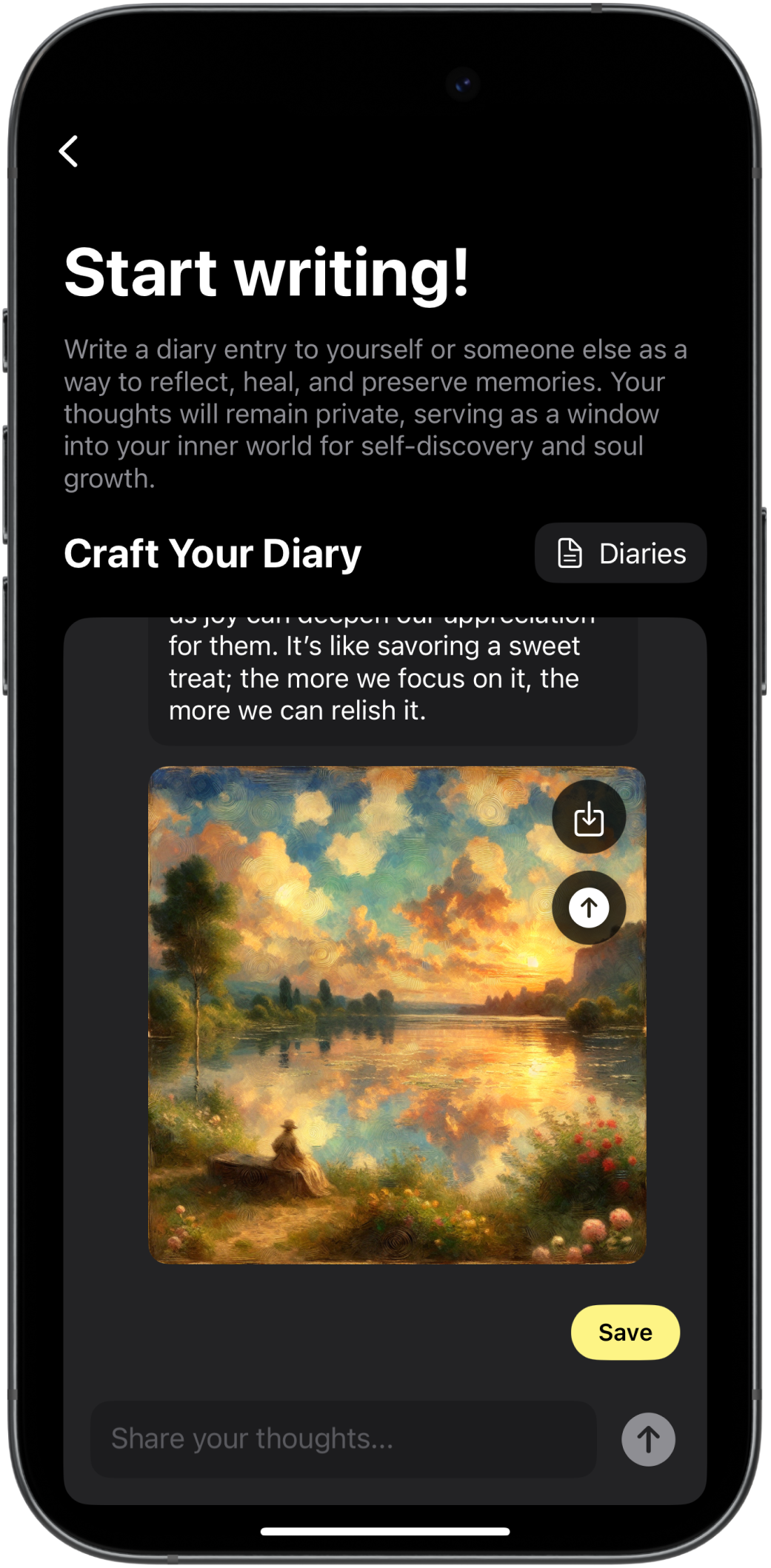
Diary

Diary

User profile

Meeting the user

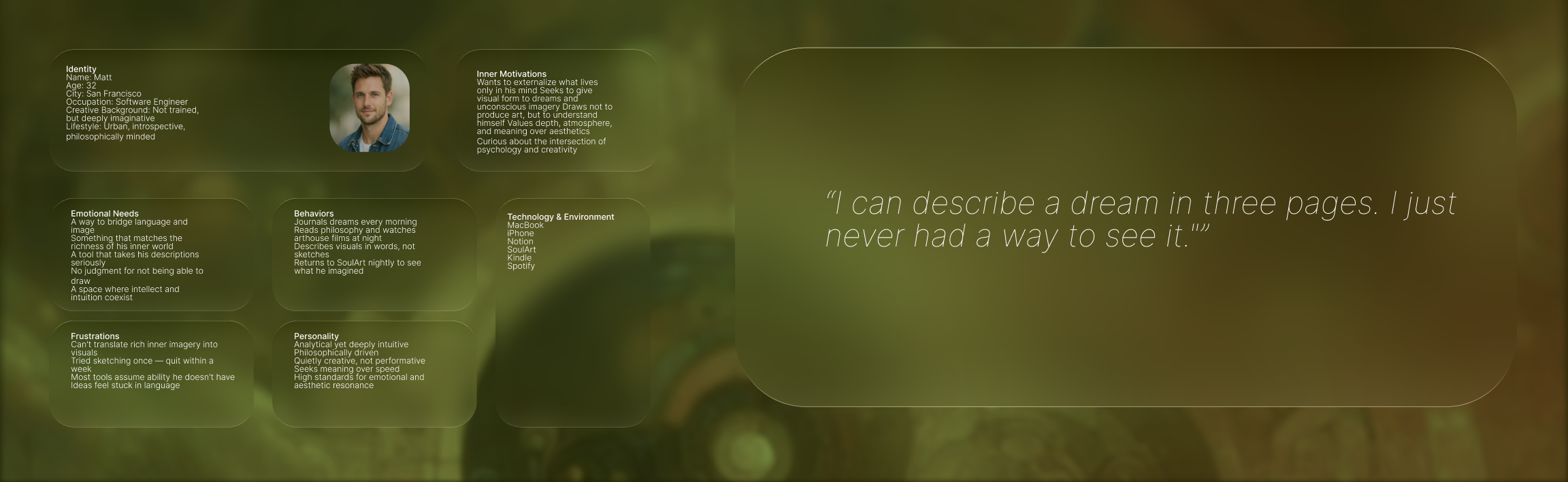
Matt is a software engineer who spends his evenings reading philosophy, watching arthouse films, and journaling his dreams. Drawn to Jungian psychology and Taoist thought, he believes the unconscious speaks in images — but he can't draw. He tried sketching once and quit within a week, defeated by the gap between imagination and paper.

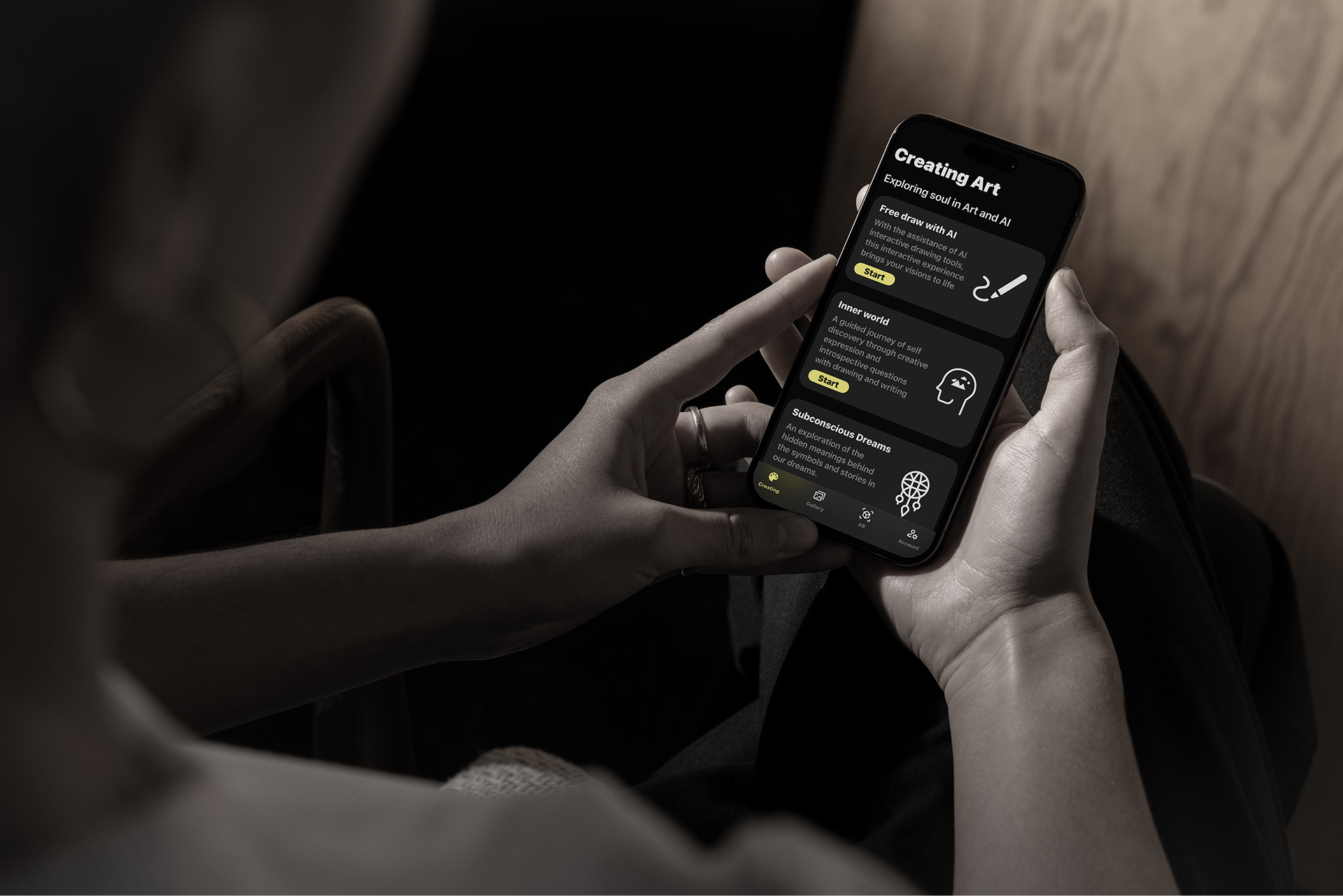
Since discovering SoulArt, he uses the Subconscious Dreams feature almost nightly — typing in his dream and waiting not just for analysis, but for the image. "It looks like something out of a Tarkovsky film," he said. "That's exactly the feeling." For Matt, SoulArt isn't a wellness tool — it's a philosophical instrument that gives form to things that previously only existed as language.

User Profile
SoulArt holding phone SoulArt canvas
Design decision

One style, every output

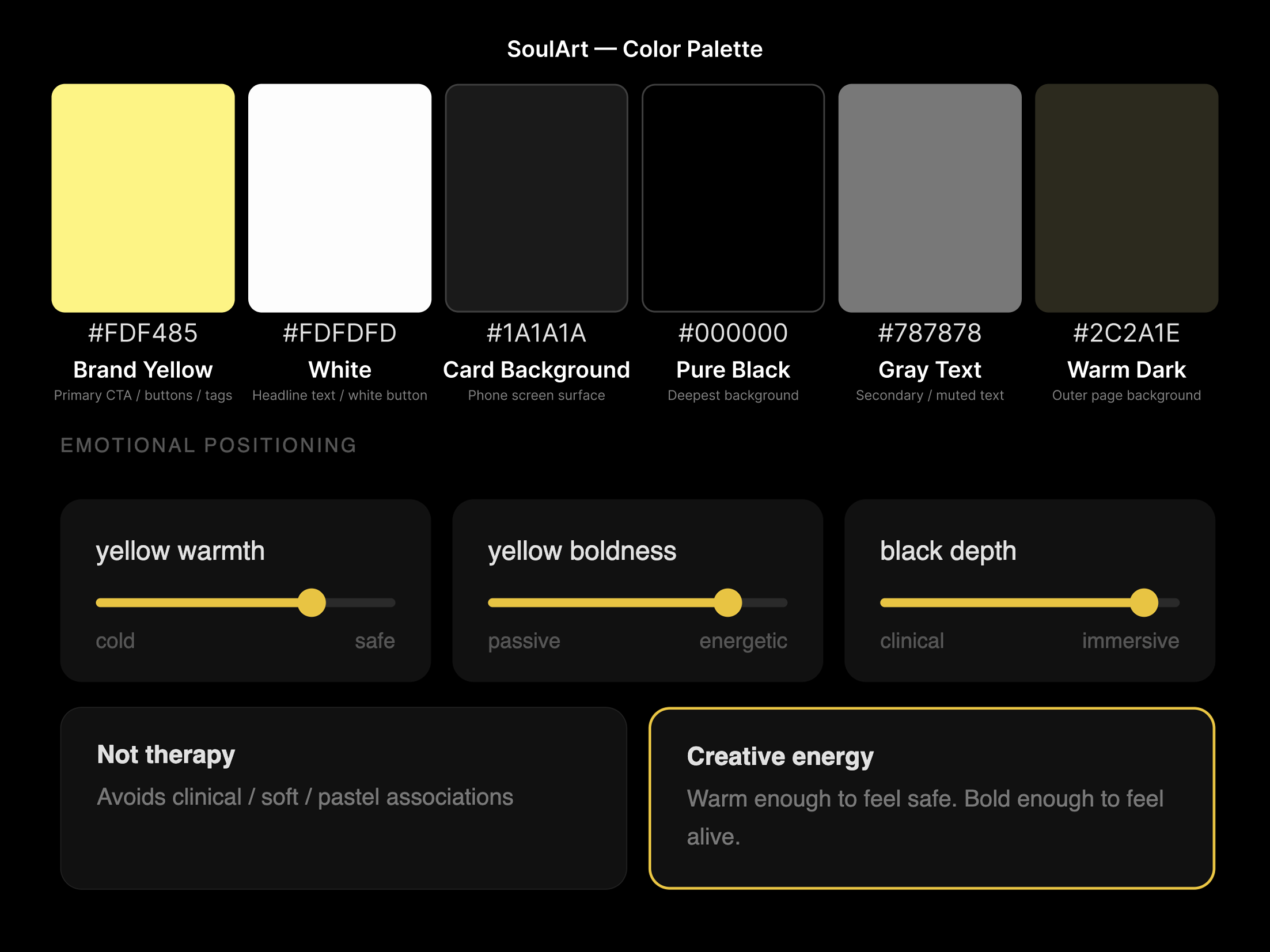
We locked the style: abstract, thick-stroke, emotionally expressive — consistent enough that users always recognize the output as "theirs," distinctive enough that it feels like art rather than a filter. The brand color, warm yellow on deep black, carries the same logic — warm enough to feel safe, bold enough to feel like creative energy rather than therapy.

Design Decision
Brand color logic

Color as emotional signal

The brand color carries the same logic — warm enough to feel safe, bold enough to feel like creative energy rather than therapy.

Color choice Color choice case 1 Color choice case 2
User feedback

User feedback

Users find the experience genuinely compelling. Across early testers, the core proposition landed strongly — the idea of turning personal sketches into polished AI-generated art resonated immediately. Users described the app as "unlike anything they'd tried before" and returned to it consistently, particularly through the Subconscious Dreams and Inner World flows. The creative feedback loop — draw something, receive a transformed image — proved to be a natural hook that kept people engaged beyond the first session.

Engagement High
First impression Strong
Return rate Solid
Visual direction

While the overall dark aesthetic and brand yellow read as intentional and confident, testers noted that several screens feel sparse at the component level. Iconography, micro-interactions, transitions between states, and the visual texture of content cards all have room to grow. Adding more considered detail — not decoration, but purposeful visual information density — would bring the interface closer to the quality of the AI-generated output it showcases.

User Feedback
Next direction

Making AI and art feel like one thing, not two

01
Organic AI–art integration

The current experience still has a visible seam between the user's input and the AI's output. The next technical direction is to make that boundary feel more fluid — as if the AI is a natural extension of the user's hand rather than a separate engine processing their work.

02
AR as a full creative destination

AR should graduate from a feature into a core use case — improving spatial tracking, enabling real-time rendering, and ultimately connecting to the physical print experience so users can move from digital to real-world ownership in one flow.

03
Richer visual surface

Invest in the details that signal craft: refined transitions, expressive micro-interactions, and more layered screen compositions that reflect the visual ambition of the product.

Next Direction

Live on the App Store. Early users praised the visual coherence of AI-generated outputs.